
U.S. economy maintains resilient momentum into late 2025 with moderating growth, easing policy, and ample liquidity.
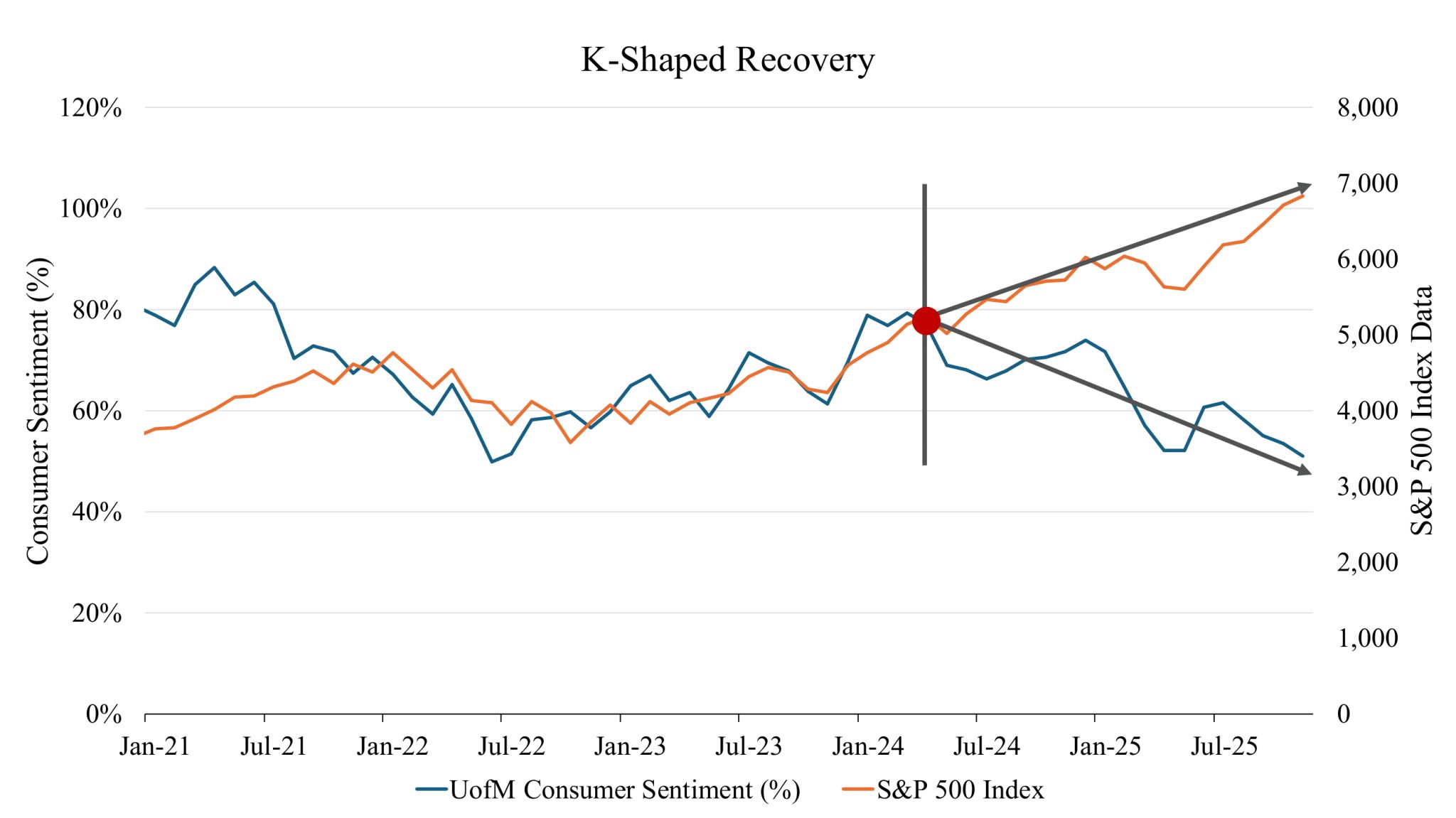
- U.S. markets remain strong, but consumer sentiment and opportunity gaps reveal a growing economic divide—the K‑Shaped Economy.
- Artificial intelligence (AI) is amplifying both productivity and inequality, rewarding certain roles while erasing others.
AI’s Role in the Divide
- Productivity gains are concentrated among high‑skill, judgment‑driven roles that effectively leverage AI.
- Entry‑level positions in finance, tech, and related sectors are shrinking as automation replaces traditional job functions.
- Over 40% of Fortune 500 companies report workforce reductions linked to AI adoption.
Impact on Young Professionals
- Recent graduates face tighter job markets and fewer career entry points.
- Student loan delinquencies have risen to 12.9%, the highest since the financial crisis.
- Stanford research shows a 16% drop in youth employment in some high‑paying sectors tied to AI disruption.
Wider Implications
- Economic rewards are increasingly concentrated among those with capital and AI capability.
- The divide threatens long‑term growth, consumption, and social stability.
- Without intervention, the K‑Shaped Economy could harden into a lasting structural divide.
Path Forward
- Policymakers and leaders must focus on:
- Workforce reskilling and education reform.
- Expanding access to private capital and technology.
- Encouraging inclusive innovation strategies.
Bankers Edge Advisory helps companies align capital strategies with this shifting landscape—turning technological disruption into opportunity.