
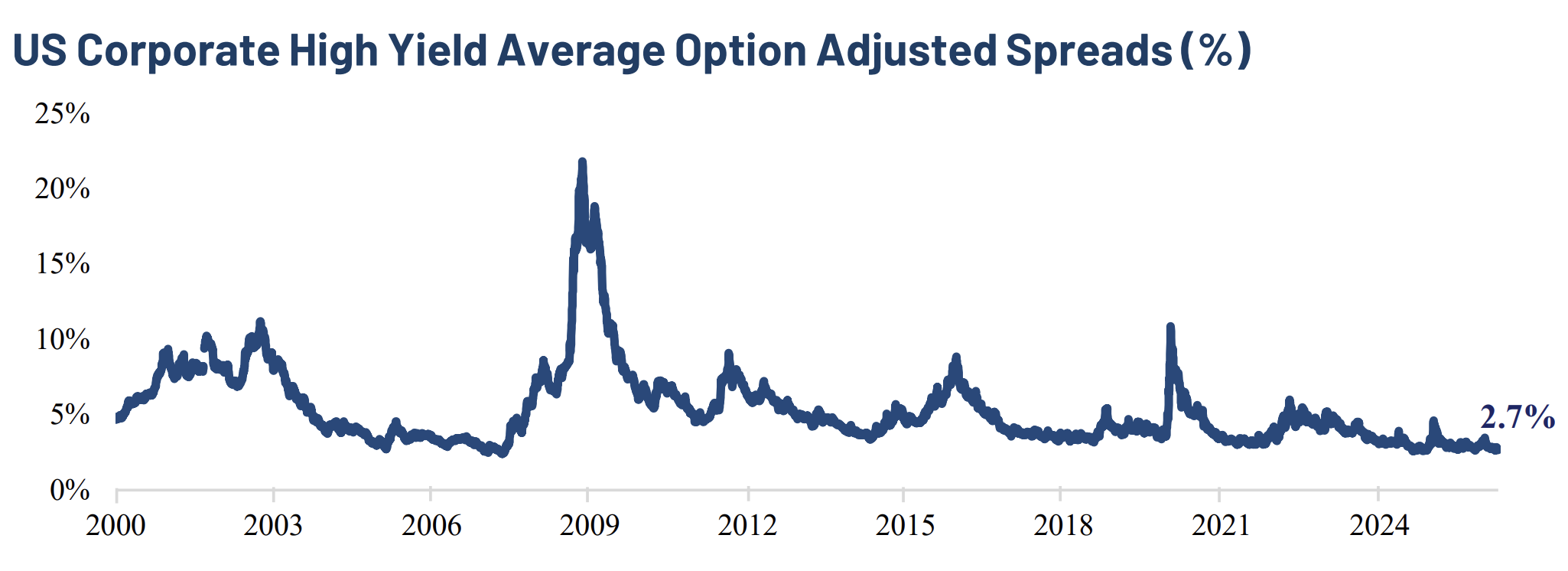
High-yield credit spreads have compressed sharply this year, falling from a 3.16% high to a low near 2.70% in early July. That is about as low as high-yield credit risk has been priced in nearly two decades. For public issuers, that’s a market data point. For middle market companies, it’s a signal worth reading closely, because what happens at the top of the credit market rarely stays there
When spreads on below-investment-grade debt tighten this far, capital gets cheaper and lenders get hungrier. Banks, private credit funds, and direct lenders that compete for yield in the public market eventually chase it in the middle market too. Tighter spreads today often mean more available capital and more competitive terms for privately held companies in the quarters ahead
For a middle market company weighing a refinancing, acquisition, or capital raise, that’s the opening. Lower credit premiums up the chain can improve your financing economics too. But the middle market doesn’t get the index price. Your access and terms come down to your leverage, cash-flow stability, sector, collateral, and how well your credit story is told. Two companies with identical financials can get very different answers depending on how they come to market.
So don’t read a sub-3% headline and assume the door is open to everyone. It’s open to companies that know exactly where they sit on the quality spectrum and can prove it to a lender.
That’s where we come in. Bankers Edge Advisory helps middle market companies translate a favorable credit market into real terms. We position your credit story, sharpen your financing, and help you move while the window is open. If a refinancing, acquisition, or raise is on your horizon, let’s talk before conditions shift.
Source: Federal Reserve Bank of St. Louis; J.P. Morgan Domestic High Yield Index; Bankers Edge Advisory analysis.