
The Fed isn’t your problem right now. Inflation is.
That’s a harder reality to plan around than it sounds.
For the past two years, dealmakers have been watching the Fed. Waiting for cuts, modeling the spread compression, building around the easing cycle. That playbook made sense at the time. But something shifted in May, and it’s worth paying attention to.
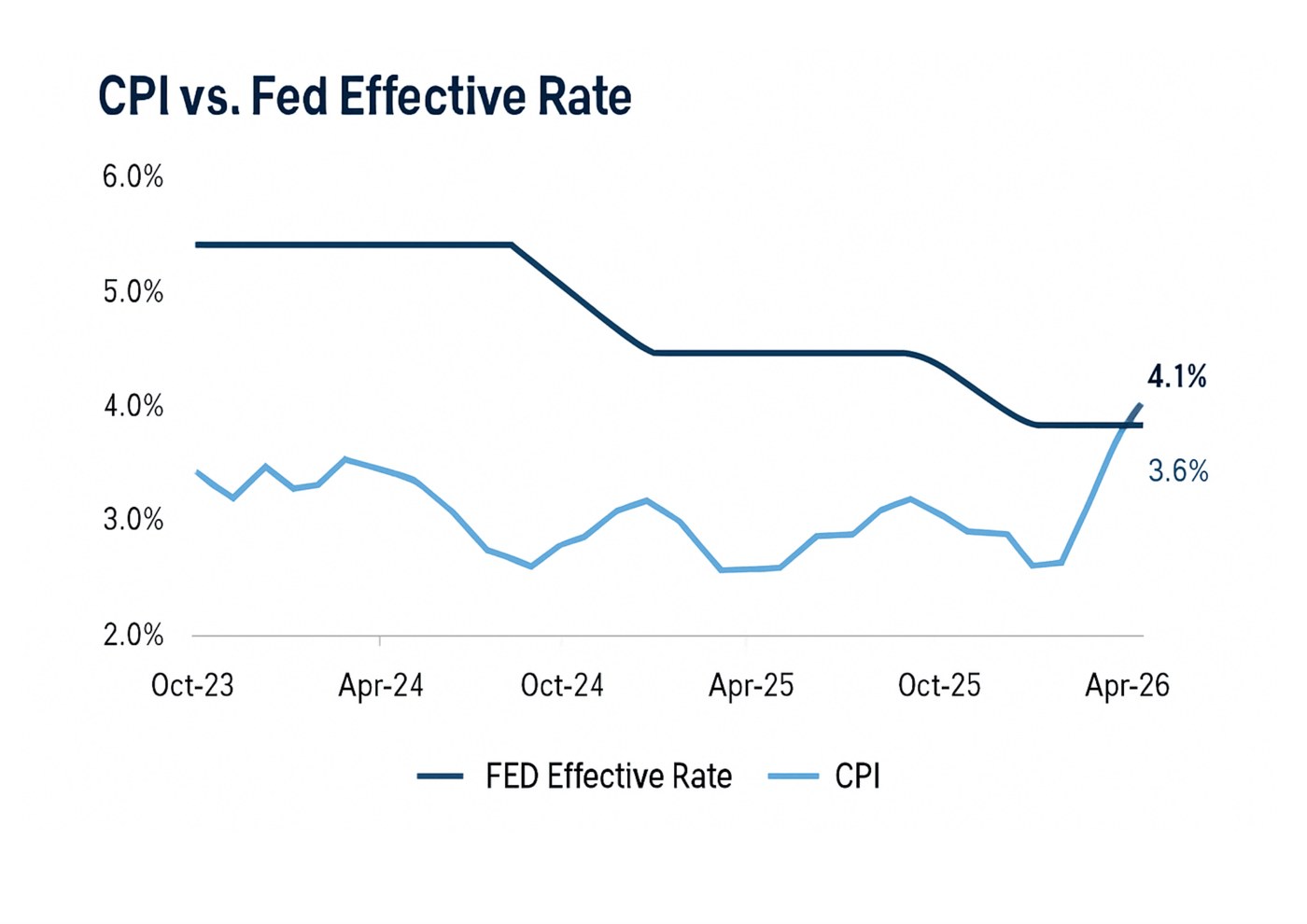
Headline CPI climbed as high as 4.2%, a three-year high, driven largely by energy and food prices that don’t respond to Fed policy the way core inflation does. Meanwhile, real wages turned negative for the second consecutive month. Paychecks are still growing in dollar terms, but inflation is outrunning them. Consumer purchasing power is quietly eroding.
And the Fed is stuck.
The effective funds rate sits around 3.6%. The market is no longer just debating when cuts begin. It’s questioning whether cuts are appropriate at all while headline inflation is reaccelerating. The 10-year Treasury is holding around 4.5%, and the yield curve is pricing in a longer period of elevated capital costs, not a near-term reprieve.
For sponsors and operators, this matters in a very practical way. Financing is still available. Banks are well-capitalized, private credit is active, and lenders are engaged. But the cost of capital isn’t coming down on the timeline most models assumed six months ago. Deals underwritten to an easing cycle need to be pressure-tested against a higher-for-longer reality.
The businesses that will perform best in this environment are the ones that don’t need rates to fall to justify the investment thesis. Strong cash flow. Pricing power. Operating leverage that isn’t dependent on a refinance tailwind.
Those businesses exist. And for them, the market remains open.
At Bankers Edge Advisory, we help our clients stress-test assumptions and find the right financing structure for the environment that actually exists, not the one that was expected six months ago.
If you’re navigating a capital raise or refinancing decision in this environment, reach out. Getting the structure right from the start is what separates a good outcome from an expensive one.
Source: Atlanta Fed GDPNow; U.S. Bureau of Labor Statistics; Bankers Edge Advisory analysis